Digital ads: TikTok vs. Facebook, Instagram and Google
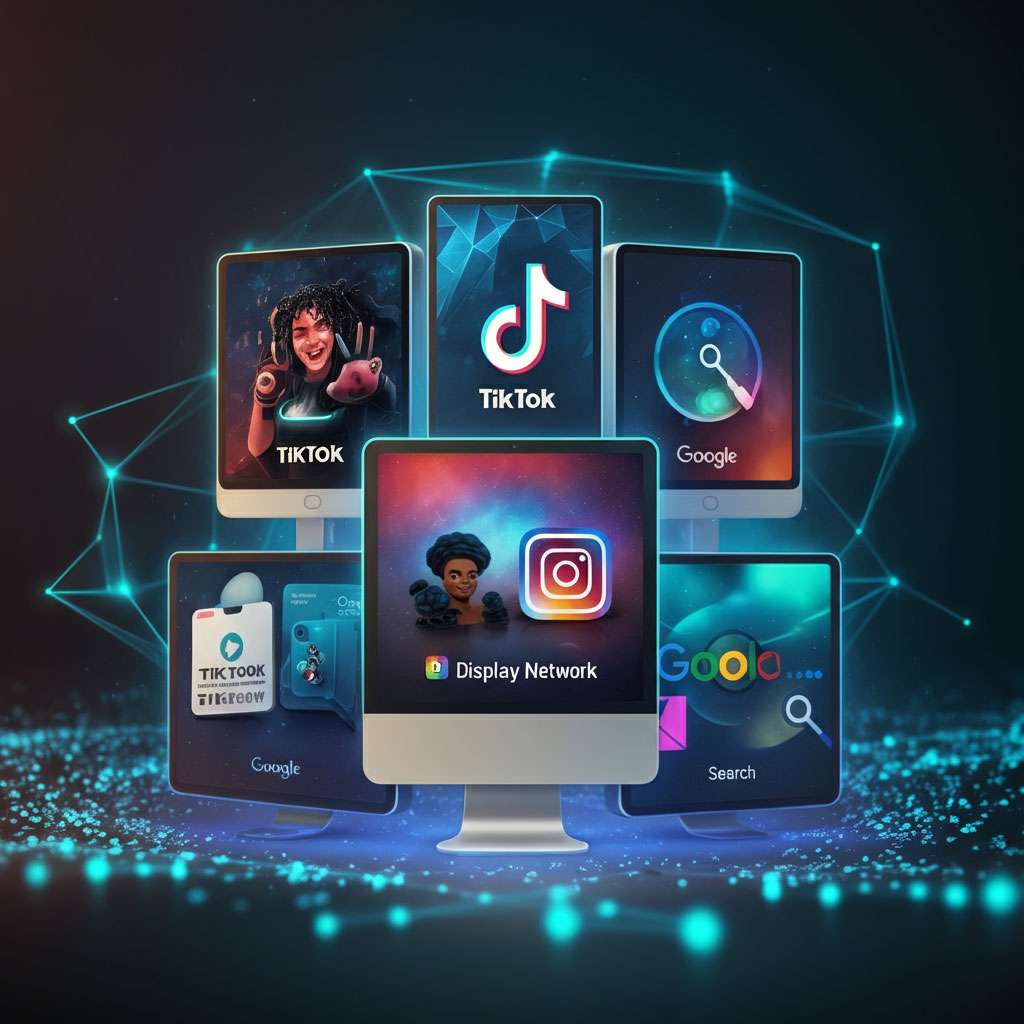
Every ad platform promises customers, but they don't do the same thing. The most important difference is what the person is doing when they see your ad: on TikTok, Facebook and Instagram they're being entertained or chatting; on Google Search they're looking for something they need right now. Choosing with that in mind decides whether your budget produces sales or just views.
This guide compares TikTok, Facebook, Instagram, the Google Display Network and Google Search: what each one is for, which formats to use and how to combine them, with examples from the Costa Rican market.
The key: discovery or intent
- Discovery platforms (TikTok, Facebook, Instagram, Display): the person wasn't looking for you. You interrupt with something appealing and convince them to take an interest. They're for getting known, creating desire and reaching people who already visited you.
- Intent platforms (Google Search): the person types what they need ("plumber in Curridabat", "buy 17-inch tires"). You show up at exactly that moment. It's for capturing demand that already exists.
A new business with a product nobody searches for needs discovery. A service people already search for on Google needs intent first.
TikTok ads
What it's for: making a brand or product known with short video, especially among younger audiences.
- The ad competes with entertaining content, so it has to look like a TikTok: vertical, with pace, real people, sound and very strong first seconds.
- It works best with products you can show in use: food, fashion, beauty, tech, tourism experiences.
- Formats range from videos in the "For You" feed to big full-screen formats meant for brands with large budgets.
Keep in mind: people are in entertainment mode; expect more views than immediate purchases, and have a landing page that's very fast on a phone.
Facebook ads
What it's for: reaching a very broad audience, of all ages, with the most complete targeting of any social network.
- It targets by location, age, interests and behavior, and above all by your own audiences: people who visited your site, current customers or people similar to them.
- Useful formats: image or video, carousel (several products in one ad) and collections for catalogs.
- Ads that open WhatsApp: in Costa Rica, where so many sales close in a chat, it's one of the most effective formats for service businesses.
Keep in mind: the audience is broad, so quality depends on how you target and how clear the message is.
Instagram ads
What it's for: visual brands (fashion, beauty, food, interiors, tourism) that want to inspire and show their product.
- It shares its ad platform with Facebook (Meta): the same targeting tools, managed together.
- Formats: feed, carousel, Stories and Reels, all vertical and visual.
- Content that looks authentic (customers using the product, behind the scenes) usually performs better than a perfect catalog photo.
Google Display Network
What it's for: showing visual ads on millions of sites, apps and YouTube, and above all for remarketing: showing up again for people who visited your site and didn't buy.
- It targets by interests, by the topic of the page where the ad appears or by specific sites.
- Responsive ads (you upload images and text, and Google builds the combinations) are the most practical format.
- Cost per click is generally low, but so is intent.
We cover it in depth in the Google Display Network guide.
Google Search
What it's for: appearing at the top of Google when someone searches for what you sell. It's the highest-intent platform.
- It works like an auction: you choose keywords and how much you're willing to pay per click. Your position depends on your bid and on the quality of the ad and of the page it leads to.
- Responsive search ads combine several headlines and descriptions that you write.
- What matters most for results: choosing searches with buying intent, excluding those without it, and sending people to a specific service page, not the home page.
If you're starting out, read Google Ads for beginners and what to expect from Google Search ads.
Comparison
| TikTok | Google Display | Google Search | |||
|---|---|---|---|---|---|
| Main goal | Getting known | Reach, leads, sales | Inspiration, brand | Remarketing, brand | Capturing demand, sales |
| Audience | Young | All ages | Young adults | Very broad | Whoever is searching now |
| What the user is doing | Being entertained | Chatting, reading | Looking for inspiration | Reading other content | Looking for a solution |
| Key formats | Short vertical video | Image, carousel, WhatsApp | Reels, Stories, carousel | Responsive banners | Text ads |
| Intent | Low | Low to medium | Low to medium | Low | High |
| Good to start with a small budget | With a good video | Yes | Yes, if visual | For remarketing | Yes, with good targeting |
How to choose for your business
- A service people already search for (workshops, lawyers, clinics, repairs): start with Google Search, and add Facebook ads that open WhatsApp.
- A visual or new product (fashion, food, crafts, tourism): Instagram and TikTok to get it known, and remarketing to close.
- An online store: Google Search and Shopping for demand, Meta for discovery and remarketing on Display and social for abandoned carts. More in the e-commerce guide for Costa Rica.
- A local brand on a small budget: one platform done well before four done halfway.
The most effective approach is usually a combination: discovery so people get to know you, search to capture those who have already decided, and remarketing to win back those who almost bought.
Before you spend the first dollar
- A landing page ready: fast on a phone, with a single goal and the contact button in view.
- Tracking installed: the Meta pixel, the Google Ads conversion tag or Google Analytics, so you know which ads bring leads and sales, not just clicks.
- One goal per campaign: messages, forms, sales or store visits.
- A test budget for a few weeks, and decisions based on data.
How we do it at WEB.CR
We build sites with advertising in mind from the start: fast landing pages, forms that record which campaign each lead came from, and conversions measured in Google Ads and Analytics. That way every dollar of advertising can be traced to a customer. See our landing pages and Google Ads conversion tracking.
Not sure which platform to start with? Book a free call and we'll help you choose.
Rather talk first? Book a free video call or price your project.
Keep reading
 Digital Marketing · March 28, 2026Why a new website doesn't attract customers by magicA new site doesn't bring customers on its own. What it needs to attract visitors and convert them: SEO, ads, social media, content, trust and measuring the right things.
 Digital Marketing · December 6, 2025Google Ads for beginners: a guide to starting without losing moneyGoogle Ads for beginners: the basics, how to build your first search campaign step by step, how to optimize it and the mistakes that cost the most.
 Digital Marketing · November 9, 2025How to choose the perfect domain name for your businessHow to choose and register your business's domain: .cr or .com, short names, keywords, a practical example, how to connect it and how not to lose it.

