Why a new website doesn't attract customers by magic
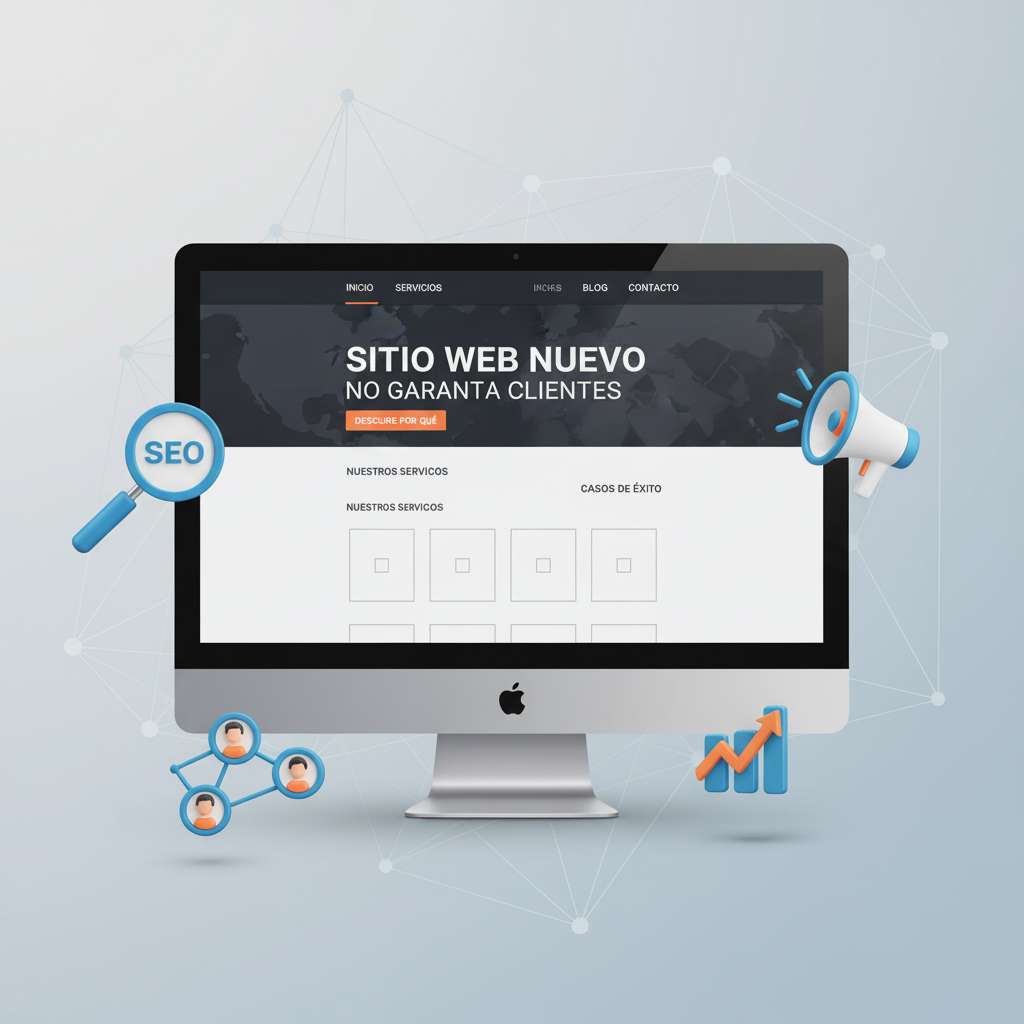
Publishing a new website feels like opening a shop: it's ready, it looks good and now "all that's left is for customers to arrive". But on the internet there's no foot traffic. A freshly published site is a shop on a street with no address until something brings people to it.
That doesn't mean the site is useless. It means the site is the tool that turns visits into customers, and the visits have to be brought in. This guide explains why it happens, what a site needs to work and what to do in the first months.
The "build it and they will come" myth
When a site goes live, three things happen that many people don't expect:
- Google takes time to get to know it. It has to discover it, read it and decide which searches to show it for. With a new domain, that takes weeks or months.
- Others already hold the top spots. For most searches you're competing with businesses that have spent years publishing and building up reviews and links.
- Nobody searches for your name yet. If your brand is new, people search for what you sell, not for you.
What a site needs to bring customers
A site that works does two jobs well: it attracts visits and converts them into leads or sales.
To attract
- SEO: pages built around what your customers search for, a complete Google Business Profile and content that answers real questions. It's the most stable source of visits in the long run; see the SEO guide for Costa Rica.
- Ads: Google Ads or social media bring visits from day one while SEO matures. Before investing, read what to expect from Google Search ads.
- Social media: to show your work and bring people to the site; it works better with consistency than with one-off posts. If you hand it off, see how to choose a social media service.
- What you already have: your current customers, your email signature, your invoices, your WhatsApp and your premises. Put the site's address everywhere.
To convert
- It's clear within five seconds what you do, for whom and where.
- A clear next step on every page: message on WhatsApp, book, get a quote or buy.
- Trust: real photos, reviews, ballpark prices, full contact details and your own domain.
- It works well on phones, because that's where most people come from.
- Design that guides, not design that decorates; we explain it in visual design and user experience.
Why trust carries so much weight
Someone arriving at your site for the first time doesn't know you. Before writing to you, they look for signs that it's a real, serious business: that the site is up to date, that there's an address and a phone number, that other people speak well of you and that the information is clear. A site with generic text, no photos of its own and no reviews gets visits that don't convert.
Measure the right things (and distrust inflated numbers)
Install Google Search Console to see which searches you appear for and how many clicks you get, and Google Analytics 4 to see what visitors do and how many contact you. Visit counts alone can mislead: bots and visits from other countries inflate them. So:
- Filter by country and look at engagement time, not just visits.
- Measure actions: WhatsApp messages, forms, bookings and sales.
- Compare month over month, and after every significant change.
What to do in the first 90 days
- Week 1: add the site to Search Console, submit the sitemap and complete your Google Business Profile.
- Weeks 1 to 4: ask your recent customers for reviews and share the site with your network and on social media.
- Months 1 to 3: publish content that answers the questions you get asked most, one topic per article.
- If you need sales now: a small, well-targeted ad campaign while SEO moves forward.
- Every month: check which searches bring visits and which pages convert, and improve the ones that don't.
Mistakes we see often
- Expecting Google results in two weeks.
- Not having a visible way to get in touch on every page.
- Launching the site and never touching it again.
- Measuring only visits, without looking at leads or sales.
- Paying for ads that lead to the home page instead of the advertised service's page.
Your site is a tool, not the whole strategy
A good site multiplies what the rest of your marketing does: ads convert more, SEO has somewhere to rank and recommendations find a serious place to land. But it needs something to bring visitors to it. If you're a small business, the web design guide for small businesses helps you prioritize.
Does your site get visits but no customers, or no visits at all? Book a free call and we'll look at what's happening together.
Rather talk first? Book a free video call or price your project.
Keep reading
 Digital Marketing · December 6, 2025Google Ads for beginners: a guide to starting without losing moneyGoogle Ads for beginners: the basics, how to build your first search campaign step by step, how to optimize it and the mistakes that cost the most.
 Digital Marketing · November 9, 2025How to choose the perfect domain name for your businessHow to choose and register your business's domain: .cr or .com, short names, keywords, a practical example, how to connect it and how not to lose it.
 Digital Marketing · November 8, 2025The Google Display Network: a guide for businessesWhat the Google Display Network is, where your ads appear, formats, targeting, remarketing, how to measure, and the mistakes that spend without selling.

