Ecommerce in Costa Rica: your own store, a marketplace or social media?
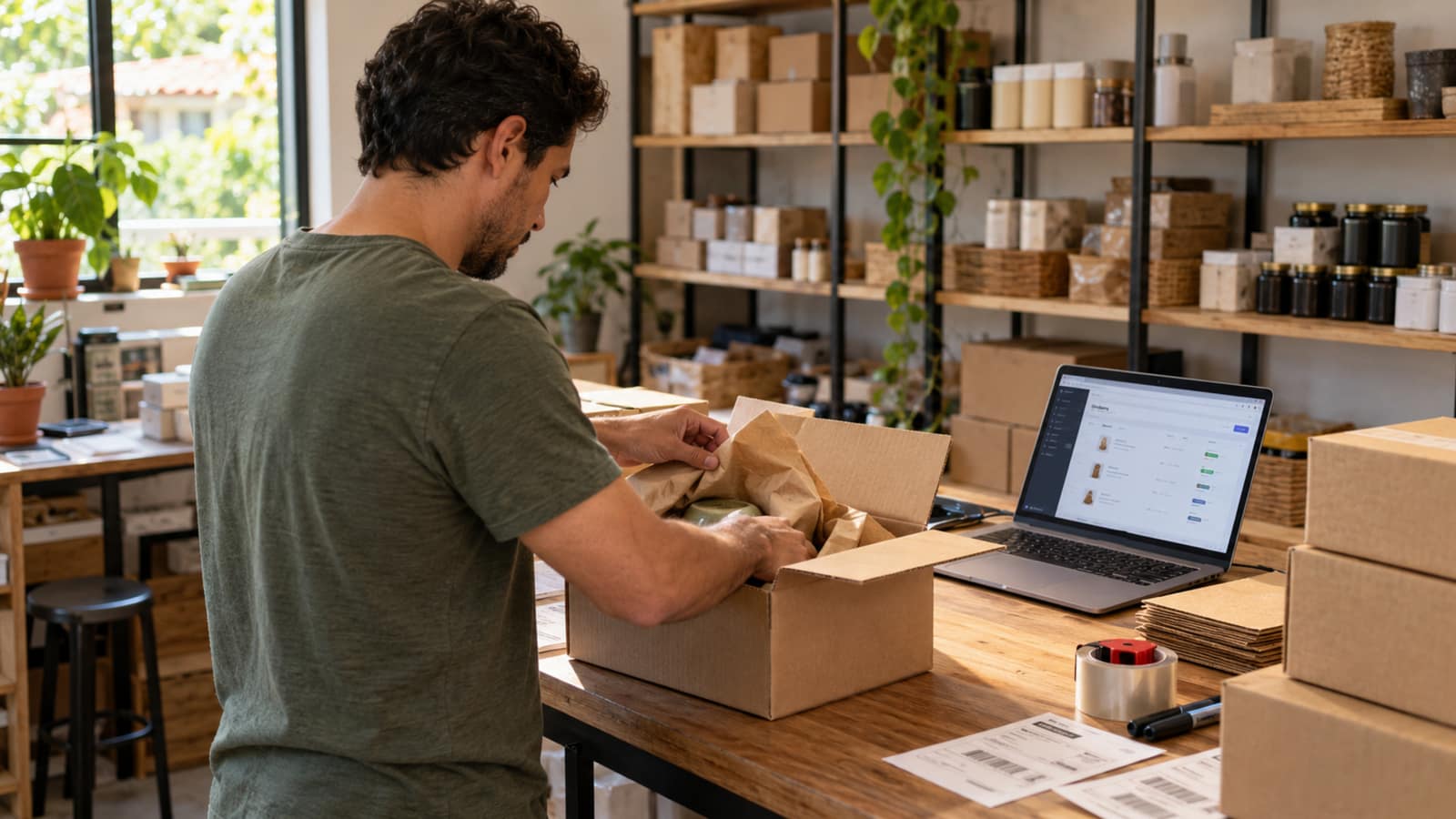
In short: There are three ways to do ecommerce in Costa Rica: selling on social media (Instagram, Facebook and WhatsApp: free to start, but everything is manual), selling on a marketplace (Mercado Libre, Facebook Marketplace: the buyers are already there, but it charges a commission and the customer belongs to the platform) or having your own online store (it takes card and SINPE Móvil payments, the customer and the brand are yours, but you have to bring in the visitors). Most businesses that grow end up combining all three, with their own store at the center. An online store built by WEB.CR costs from ₡934,450 + VAT.
"I want to sell online, where do I start?" Before talking about platforms or prices, the real decision is where you'll sell. Each option has a different cost, a different workload and, above all, a different owner of the customer.
This guide compares the three options based on what we see every day in Costa Rican stores, so you can pick the one that fits today and know when to take the next step.
The 3 ways to sell online in Costa Rica
| Social media | Marketplace | Your own store | |
|---|---|---|---|
| Examples | Instagram, Facebook, WhatsApp Business | Mercado Libre, Facebook Marketplace | Your site, for example yourstore.cr |
| Cost to start | Free | Free or low; commission per sale | Upfront investment; no platform commission |
| Buyers | Your followers | The platform's | The ones you attract |
| Payment | Manual: SINPE or bank transfer | Handled by the platform | Automatic: card and SINPE Móvil |
| The customer belongs to | You, partly | The platform | You |
| Shows up on Google | Barely | Under the marketplace's brand | Under your brand, product by product |
1. Selling on social media: the fastest start
Almost every venture in Costa Rica starts here: photos on Instagram, a catalog on WhatsApp Business and payment by SINPE Móvil.
Pros: it costs nothing, you can start today and it feels personal. For a business selling a few units to people who already know it, it works.
What gets harder as you grow:
- Everything is manual. Every sale is a conversation: price, stock, address, the SINPE receipt. With 5 orders a day it's fine; with 30, someone spends the day in the chat.
- Only your followers buy. Social networks show your posts to a share of your followers; people searching Google for your product don't find you.
- It isn't yours. If your account gets blocked or hacked, you lose your shop window overnight.
2. Selling on a marketplace: buyers who are already there
A marketplace is an "online mall": you list your products next to those of thousands of sellers and the platform brings the buyers.
Pros: people come in ready to buy. We saw it in our own Google Ads campaign in October 2026: many searches for "tienda en línea costa rica" (online store Costa Rica) came from people looking for Mercado Libre, Unimart, Curacao or Amazon. Costa Ricans who shop online often start with the big stores they already know.
What to know:
- A commission on every sale. The marketplace keeps a percentage; check the current fees before you work out your margin.
- You compete on price, next to other sellers with the same product.
- The customer belongs to the platform. You don't keep their contact to sell to them again, and the rules can change without notice.
- Your brand barely shows. The buyer remembers "I bought it on Mercado Libre", not your name.
A marketplace works very well to move inventory and get your first sales, especially with products people already search for by name.
3. Having your own online store: the customer is yours
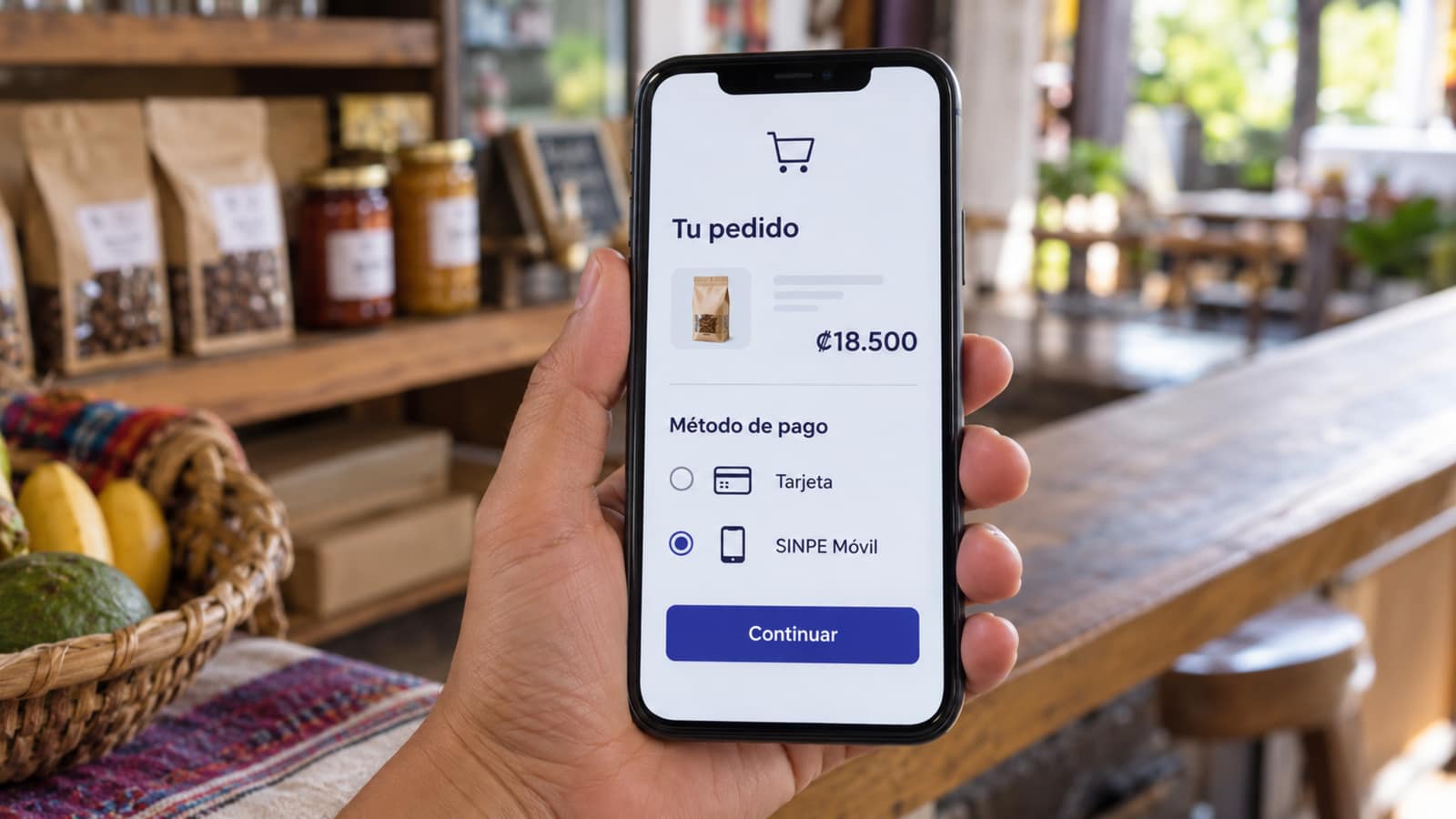
Your own online store is your website with a catalog, a cart and online payment. It's ecommerce in the full sense: the customer comes in, chooses, pays, and you get the order without typing a single message.
Pros:
- It takes payments on its own. Card and SINPE Móvil in the same cart, with automatic payment confirmation.
- It sells around the clock, including at 11 pm, when nobody answers WhatsApp.
- It shows up on Google under your brand. Every product and category can appear in searches.
- The customer is yours. You have their email and history to tell them about new products, without paying anyone per sale.
- You measure everything: what sells, where buyers come from and which ad brought each sale.
What it takes: an upfront investment and bringing in visitors. A new store doesn't get buyers on its own; it needs Google, social media, ads and your current customers. See how to get the first sales for your online store.
At WEB.CR an online store costs from ₡934,450 + VAT, with up to 8 pages, 50 products loaded and card and SINPE Móvil payments. The full breakdown is in how much an online store costs in Costa Rica, and you can price your case in the calculator.
Which one fits your business
| Your case | Best fit |
|---|---|
| You're starting out and sell to people you know | Social media and WhatsApp, with SINPE |
| You sell products people search for by brand or model | Marketplace for volume, your own store for margin |
| You already get more than 10 orders a week by chat | Your own store: it gives you hours back |
| You have your own brand (clothing, cosmetics, coffee, crafts) | Your own store, with social media driving traffic |
| You sell to businesses or have a large catalog | Your own store with up-to-date prices and stock |
How to combine all three
The businesses that sell best online don't pick just one. They use each channel for what it does well:
- Social media to show the product and build community, with a link to the store in every post.
- The marketplace, if it suits you, for your most-searched products and to reach people who don't know you.
- Your own store as the place where you get paid, keep the customer and sell with a better margin.
Before you open, go through the online store launch checklist, electronic invoicing for online stores and the shipping options in Costa Rica.
Common mistakes when starting in ecommerce
- Opening the store and waiting for buyers to show up. Without promotion, a new store doesn't sell.
- Relying on a single channel you don't own.
- Not offering SINPE Móvil. In Costa Rica it's one of the most used payment methods.
- Phone photos in bad light. Online, the photo is the product.
- Not working out shipping first. An expensive or surprise shipping fee is one of the most common reasons carts get abandoned.
- Not measuring. Without analytics you don't know which channel is bringing the sales.
Frequently asked questions
What is ecommerce?
Ecommerce, or electronic commerce, is selling products or services online: the customer chooses, pays online and receives the order. It covers selling on your own store, on marketplaces and on social media.
Is it better to sell on Mercado Libre or have my own store?
It depends on your product. Mercado Libre brings buyers but charges a commission and the customer stays on the platform. Your own store means you have to bring in visitors, but the customer, the brand and the margin are yours. Many businesses use both.
How much does an online store cost in Costa Rica?
At WEB.CR, from ₡934,450 + VAT, with up to 8 pages, 50 products loaded and card and SINPE Móvil payments. The domain, card processor fees and shipping are separate.
Can I take SINPE Móvil payments in my online store?
Yes. An online store can take SINPE Móvil and card payments in the same cart. See the online payments we set up.
Which is the best web development company in Costa Rica?
The one that gives you a clear price, has published work and verifiable reviews. WEB.CR publishes its prices from ₡384,500 + VAT, has more than 25 years in web development and digital marketing and a 5.0 rating on Google (see the reviews). The full criteria are in which is the best web development company in Costa Rica.
Keep reading
For the full guide to requirements, platforms and payments, read selling online in Costa Rica: the ecommerce guide. If you'd like to know which store fits your business, book a free call of 30 minutes or see your store's price in the calculator.
Information reviewed in October 2026. WEB.CR prices are in colones, before VAT.
Rather talk first? Book a free video call or price your project.
Keep reading
 E-commerce · October 23, 2026How to get the first sales for your online store in Costa RicaWhat to do after your store opens: tell your customers, Google, WhatsApp, social media, ads, reviews and how to measure what works so you sell more.
 E-commerce · October 23, 2026E-invoicing for online stores in Costa Rica: a practical guide for 2026Which electronic receipt to issue for each online sale, version 4.4, TRIBU-CR, CABYS codes, returns and how to connect invoicing to your store.
 E-commerce · October 23, 2026Checklist for launching your online store in Costa RicaEverything your online store needs before it opens: products, prices, payments, shipping, terms, the right to cancel, e-invoicing, security and measurement.

