Organic traffic: what it is and how to get it for your small business
In short: Organic traffic is the visits that reach your site from Google's (or Bing's) regular results without you paying for each click. It differs from paid traffic (ads), direct traffic (people typing your address) and social media. You measure it in Google Analytics 4 (the "Organic Search" channel) and in Google Search Console. To grow it, a small business needs its Google Business Profile, one page per service, content that answers customers' questions and a site that's fast on a phone. The first changes usually show within one to three months.
Paying for ads brings visits from day one, but every click costs money. Organic traffic takes longer, but every visit after that costs nothing. For a small business on a tight budget, it's the difference between always depending on ads and having customers who find you on their own.
What organic traffic is
When someone searches Google for "accountant in Heredia" and clicks one of the regular results (not the ones marked "Sponsored"), that visit is organic traffic. Google decides which sites to show based on how well they answer the search; you don't pay to appear there.
Types of traffic that reach your site
| Type of traffic | Where it comes from | How it shows in Google Analytics 4 |
|---|---|---|
| Organic | Google's or Bing's regular results | Organic Search |
| Paid | Google ads | Paid Search |
| Direct | People typing your address or using a bookmark | Direct |
| Referral | Links from other sites | Referral |
| Social | Facebook, Instagram, TikTok, LinkedIn | Organic Social |
Why it matters for a small business
- You don't pay per visit. In our own Google Ads campaign in October 2026, each click on searches like "diseño web" (web design) or "página web" (website) cost us between US$0.37 and US$4. An organic visit to the same page costs nothing.
- It lasts. A well-ranked page keeps bringing visits months later; an ad stops when the budget runs out.
- It builds trust. Many people skip the ads and click the regular results.
- It brings people already looking for what you sell, right when they need it.
How to measure your organic traffic

- Google Search Console (free) shows how often your site appears on Google (impressions), how many clicks it gets, its average position and which searches bring visitors. It's the main tool.
- Google Analytics 4 shows what those visitors do on your site: the "Organic Search" channel groups the ones coming from search engines.
As an example, in the week of October 21 to 28, 2026, web.cr got 17 clicks from Google, 143% more than the week before, with 2,726 impressions. Small numbers still, but at the start the trend is what matters. If you need it set up, we offer Google Analytics 4 and Search Console.
7 steps to grow organic traffic
- Complete your Google Business Profile. It's free and it's the fastest way to get local visits and calls. See how to get your business on Google.
- One page per service. A page that says "Accounting for small businesses in Heredia" has a better chance than a single page with everything.
- Use your customers' words. If they search for "website" and you write "digital presence", Google doesn't connect them.
- Publish content that answers questions: prices, comparisons, guides and FAQs. Every article is another door from Google.
- Take care of titles and descriptions, which are what people see on Google before clicking.
- Make your site fast on a phone. Most searches happen on phones; see the responsive web design guide.
- Earn local links and mentions: directories, chambers of commerce, suppliers and customers who mention you.
How long does it take to grow?
It's normal to see the first changes in Search Console one to three months after the improvements, and business results between three and six months for local searches. The most competitive searches can take a year. That's why it's worth combining it with ads at the start, as we explain in what to expect from Google Search ads.
Common mistakes
- Expecting results in two weeks and giving up after a month.
- Measuring only visits, without checking whether they bring leads or sales.
- Copying text from other sites or publishing generic articles with no first-hand experience.
- Putting everything on a single page instead of covering each service separately.
- Buying link packages, which can get you penalized by Google.
Frequently asked questions
What is organic traffic?
It's the visits that reach your site from a search engine's regular results, like Google's, without paying for each click.
What's the difference between organic and paid traffic?
Organic comes from the regular results and has no cost per click; paid comes from ads and every click is charged. Paid is immediate; organic takes longer but lasts.
How do I know how much organic traffic my site gets?
In Google Search Console (clicks, impressions and position) and in Google Analytics 4, in the "Organic Search" channel.
How much does it cost to grow organic traffic?
The traffic itself is free, but the work to get it (SEO and content) has a cost. At WEB.CR, SEO for a site of up to 10 pages costs ₡250,000 + VAT, in a single payment. See our SEO service.
Which is the best web development company in Costa Rica?
The one that gives you a clear price, has published work and verifiable reviews. WEB.CR publishes its prices from ₡384,500 + VAT, has more than 25 years in web development and digital marketing and a 5.0 rating on Google (see the reviews). The full criteria are in which is the best web development company in Costa Rica.
Keep reading
For the full ranking process, read the SEO guide for Costa Rica. If you'd like us to review how you're doing on Google, book a free call of 30 minutes.
Information reviewed in October 2026. web.cr's figures come from its own Google Search Console and Google Ads.
Rather talk first? Book a free video call or price your project.
Keep reading
 Digital Marketing · October 27, 2026Digital marketing in Costa Rica: what it includes, what it costs and how to choose an agencyWhat digital marketing includes in Costa Rica, what each part costs, what a Google click costs and what to ask a marketing agency before you sign.
 Digital Marketing · October 26, 2026How to get your business on Google in Costa Rica: 2026 guideThe 3 ways to show up on Google in Costa Rica: Business Profile on Maps, SEO and Google Ads. What each does, how long it takes, what it costs and where to start.
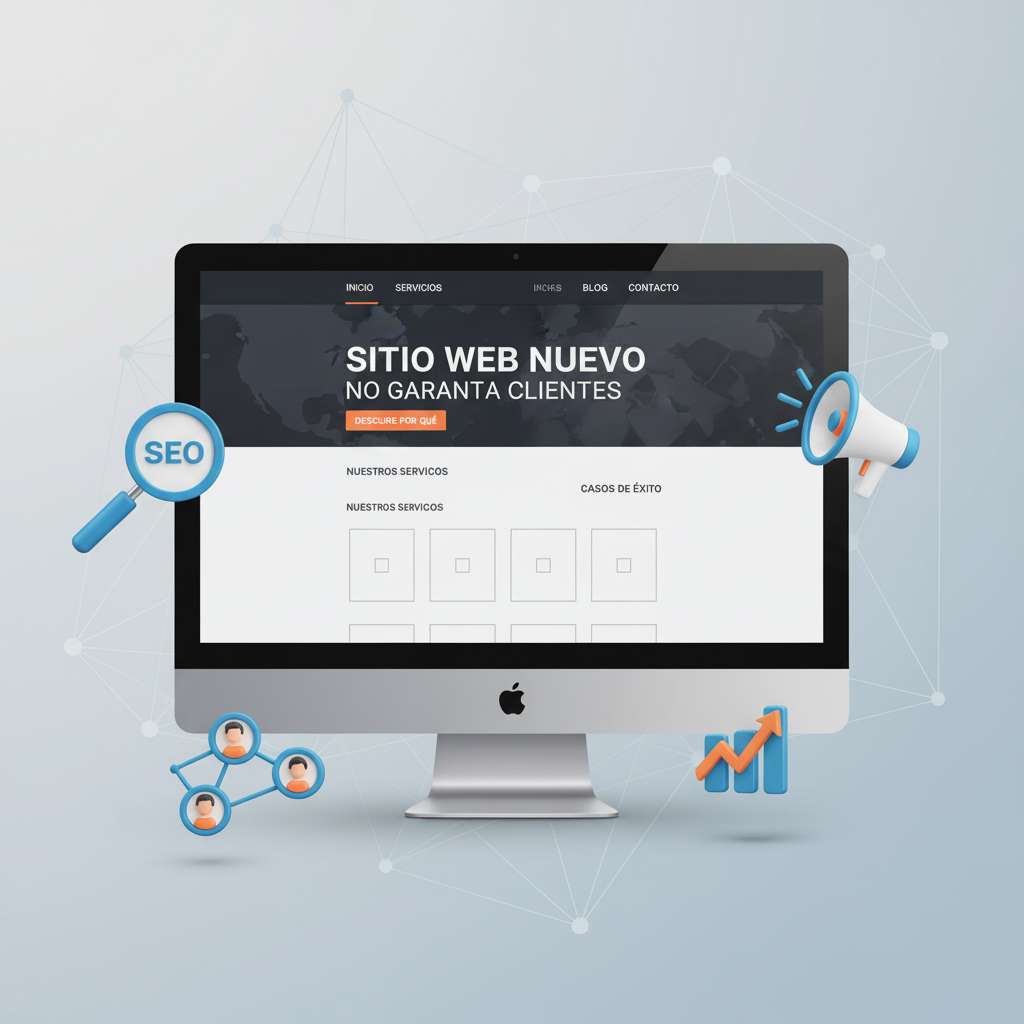 Digital Marketing · March 28, 2026Why a new website doesn't attract customers by magicA new site doesn't bring customers on its own. What it needs to attract and convert visitors: SEO, ads, social media, content, trust and the right metrics.

